When purchasing activated carbon, understanding the technical specifications is essential for making an informed decision. This guide explains the most important parameters and what they mean for your application.
Iodine Number
The iodine number is the most commonly referenced specification for activated carbon. It measures the carbon’s ability to adsorb small molecules and is expressed in mg/g. A higher iodine number indicates greater adsorption capacity for small organic molecules.
- 800-900 mg/g: Standard grade, suitable for basic applications
- 900-1100 mg/g: High grade, recommended for most water treatment applications
- 1100+ mg/g: Premium grade, for demanding applications
Mesh Size
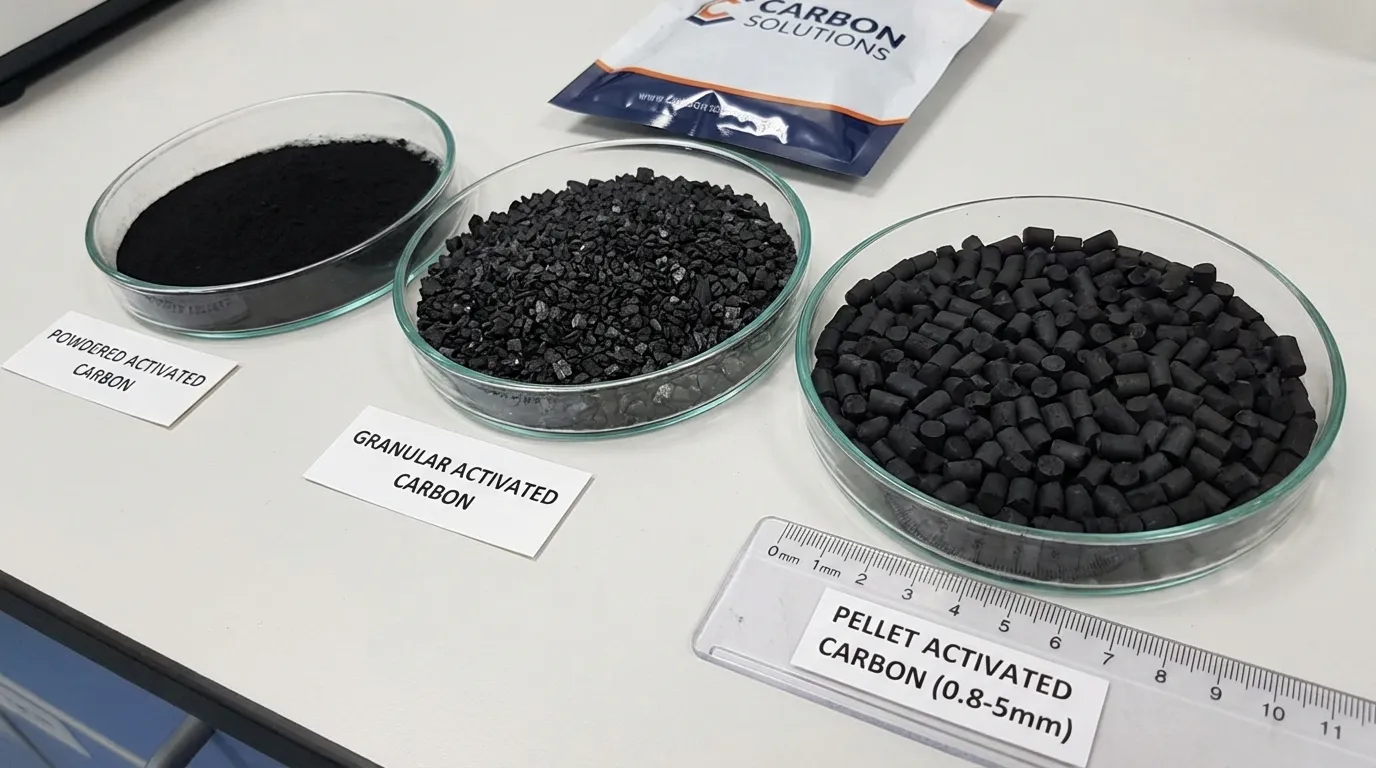
Mesh size refers to the particle size distribution of granular activated carbon. Common sizes include:
- 4x8 mesh: Coarse, used in large-scale gas phase applications
- 8x30 mesh: Medium, common in water treatment
- 12x40 mesh: Fine, provides faster adsorption kinetics
- 20x50 mesh: Very fine, used where rapid adsorption is needed
Ash Content
Ash content represents the inorganic residue remaining after combustion. Lower ash content is generally preferred as it indicates higher purity and reduces the risk of leaching unwanted minerals into treated water.
Need Help?
Our technical team is available to help you interpret specifications and select the right product for your needs. Reach out for personalized guidance.
Interested in Our Products?
Leave us a message and we'll get back to you within 24 hours.