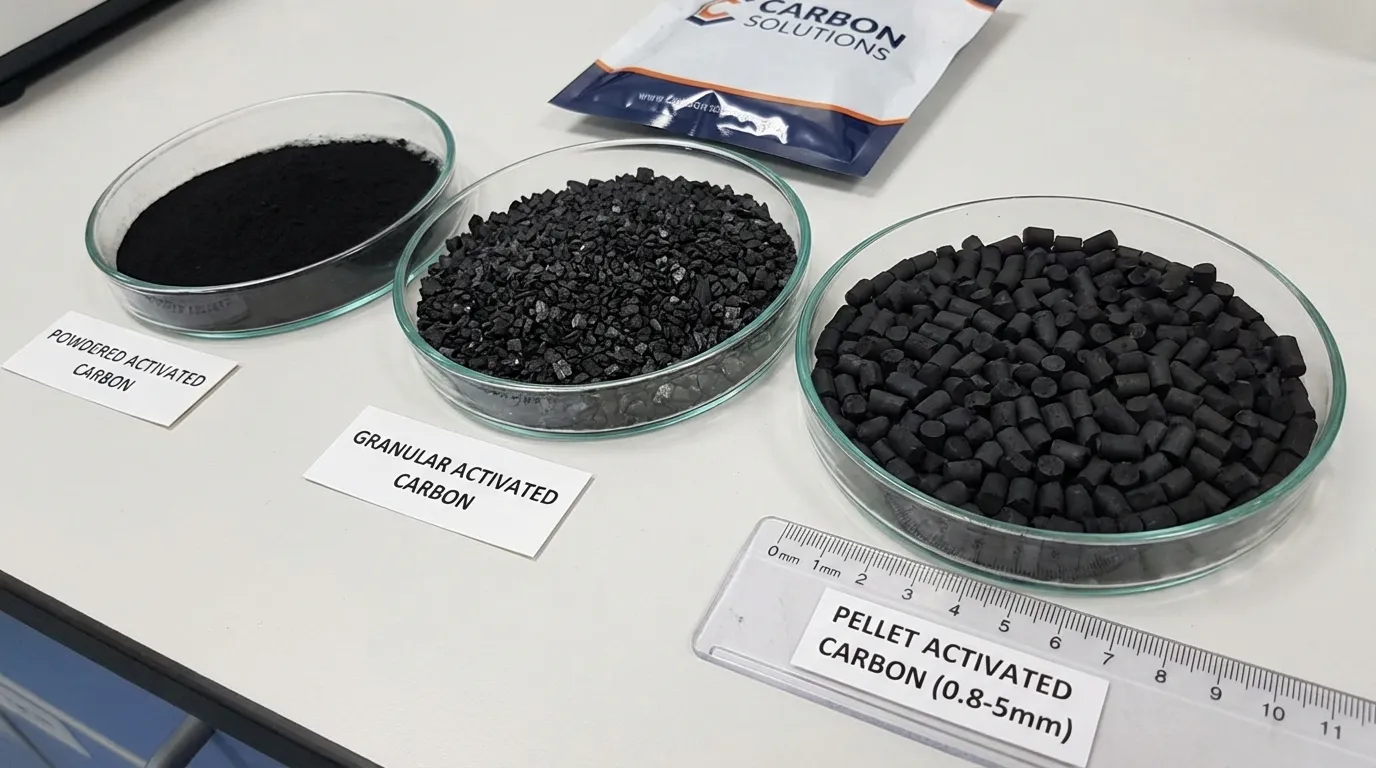
Mesh size is a fundamental specification when selecting granular activated carbon. It describes the particle size distribution of the product and has a direct impact on flow characteristics, adsorption kinetics, and system design. Getting the mesh size right is essential for balancing performance with practical operability.
How Mesh Size Works
Mesh size is defined by the number of openings per linear inch in a standard sieve. A designation like 8x30 mesh means the carbon particles pass through an 8-mesh sieve but are retained on a 30-mesh sieve. Smaller mesh numbers indicate larger openings and therefore larger particles. Common granular activated carbon sizes include 4x8, 8x30, 12x40, and 20x50 mesh. Powdered activated carbon is typically finer than 80 mesh.
Impact on Performance
Smaller particles provide faster adsorption rates because contaminants have shorter diffusion paths to reach internal pore surfaces. However, smaller particles also create higher pressure drop across a filter bed, which increases energy costs and can cause channeling if not managed properly. Larger particles allow higher flow rates with lower pressure drop but may require longer contact times to achieve the same removal efficiency.
Choosing the Right Mesh Size
For drinking water treatment, 12x40 mesh is a widely used standard that balances adsorption speed with manageable pressure drop. For vapor-phase applications, 4x8 or 4x10 mesh is common due to the need for low resistance to airflow. Always consider your system’s hydraulic constraints alongside adsorption requirements when selecting a mesh size.
Interested in Our Products?
Leave us a message and we'll get back to you within 24 hours.