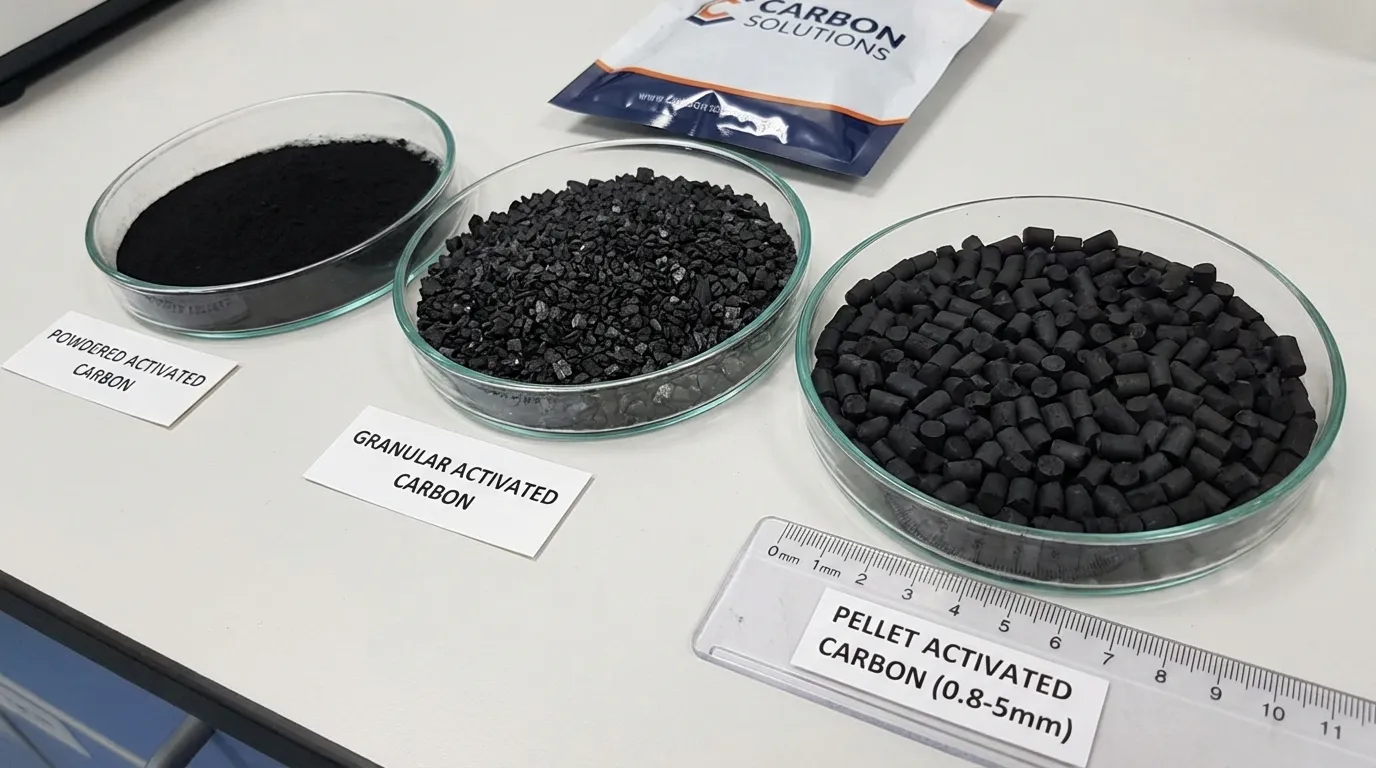
Pelletized activated carbon is produced by extruding carbon powder with a binder into uniform cylindrical pellets. This engineered form offers several distinct advantages over irregularly shaped granular carbon, particularly in gas-phase and air treatment applications.
Uniform Shape and Low Dust
The cylindrical pellet shape provides consistent packing density in adsorption beds, which promotes even airflow distribution and predictable pressure drop. Unlike crushed granular carbon, pelletized carbon generates very little dust during handling and installation. This is an important consideration in indoor air quality systems, solvent recovery units, and any application where carbon dust could contaminate the product stream or create housekeeping issues.
Mechanical Strength
Pelletized carbon typically exhibits high hardness and crush strength, which reduces breakdown during transport, loading, and operation. This durability means less fines generation over the service life of the carbon bed, maintaining consistent flow characteristics and reducing the frequency of bed replacement. In applications involving vibration or frequent thermal cycling, pelletized carbon holds its structural integrity better than many granular alternatives.
Common Applications
Pelletized activated carbon is widely used in gas masks and respiratory protection, automotive evaporative emission canisters, industrial solvent recovery systems, and odor control at wastewater treatment plants. It is also a popular choice for point-of-use air purifiers. Wherever low pressure drop, minimal dust, and uniform performance are priorities, pelletized carbon is worth evaluating.
Interested in Our Products?
Leave us a message and we'll get back to you within 24 hours.