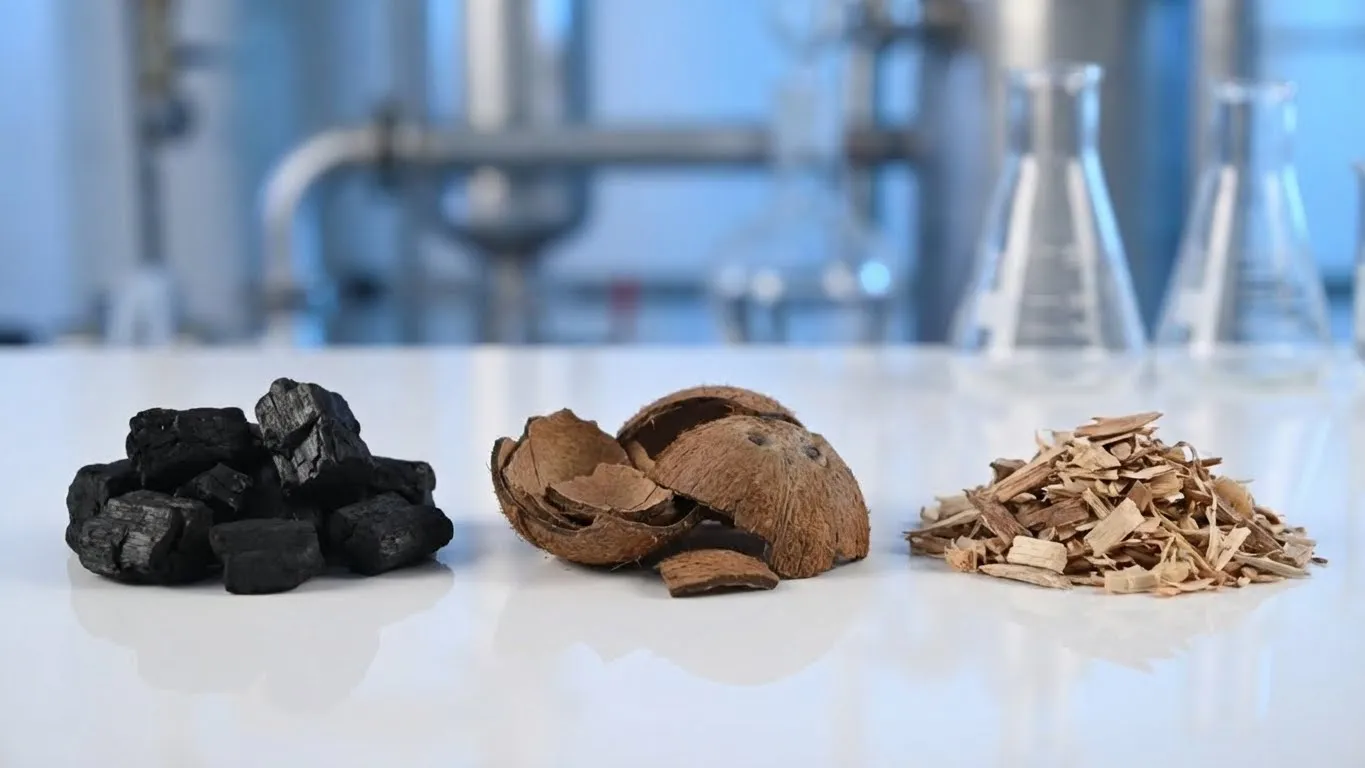
The raw material used to produce activated carbon has a significant impact on its pore structure, hardness, and adsorption characteristics. Coconut shell and coal are the two most widely used precursors in the industry, and each brings distinct advantages depending on the target application.
Coconut Shell Activated Carbon
Coconut shell carbon is known for its high proportion of micropores, which are pores smaller than 2 nanometers. This microporous structure makes it exceptionally effective at adsorbing small molecules such as volatile organic compounds and chlorine. It also has superior hardness and abrasion resistance, meaning it holds up well during backwashing and transport. These qualities make coconut shell carbon a preferred choice for drinking water purification and gold recovery operations.
Coal-Based Activated Carbon
Coal-based activated carbon, derived from bituminous or anthracite coal, features a broader pore size distribution that includes both micropores and mesopores. This makes it more versatile for applications involving a wider range of contaminant molecular sizes. Coal-based carbon is often more cost-effective for large-scale industrial processes such as wastewater treatment and flue gas purification where high volumes are required.
Making the Right Selection
Consider the molecular size of your target contaminants. For small-molecule removal and high-purity applications, coconut shell carbon is typically the better performer. For mixed-contaminant streams or budget-sensitive projects requiring large quantities, coal-based carbon delivers reliable results at a lower price point.
Interested in Our Products?
Leave us a message and we'll get back to you within 24 hours.